Choose two or three easy marks, repeat them in a predictable order and notice when the pattern changes.
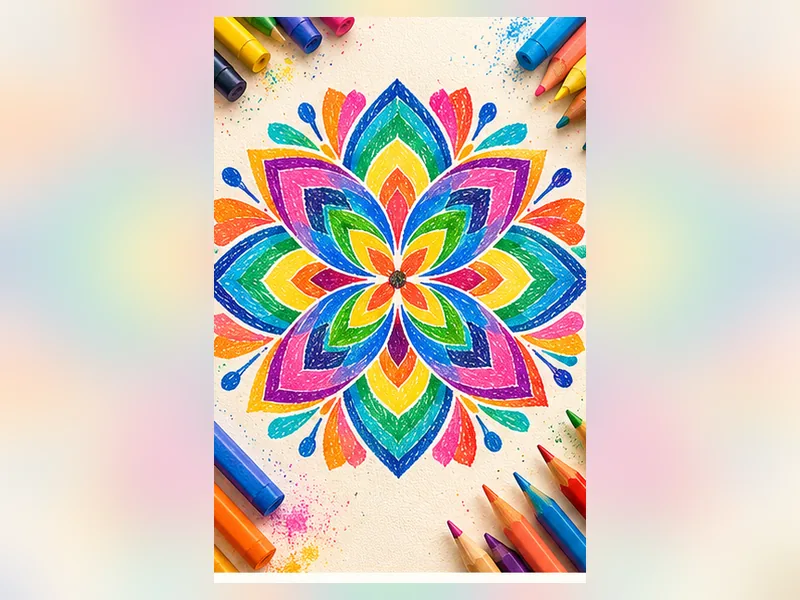
What you will learn
A pattern is a sequence with a repeatable rule.
Skills: Pattern recognition, repetition and prediction
Jump to picture steps ↓What you’ll need
- Paper
- Three coloured pencils
- Ruler (optional)
Get ready: Pick three contrasting pencils and draw a spacious square.
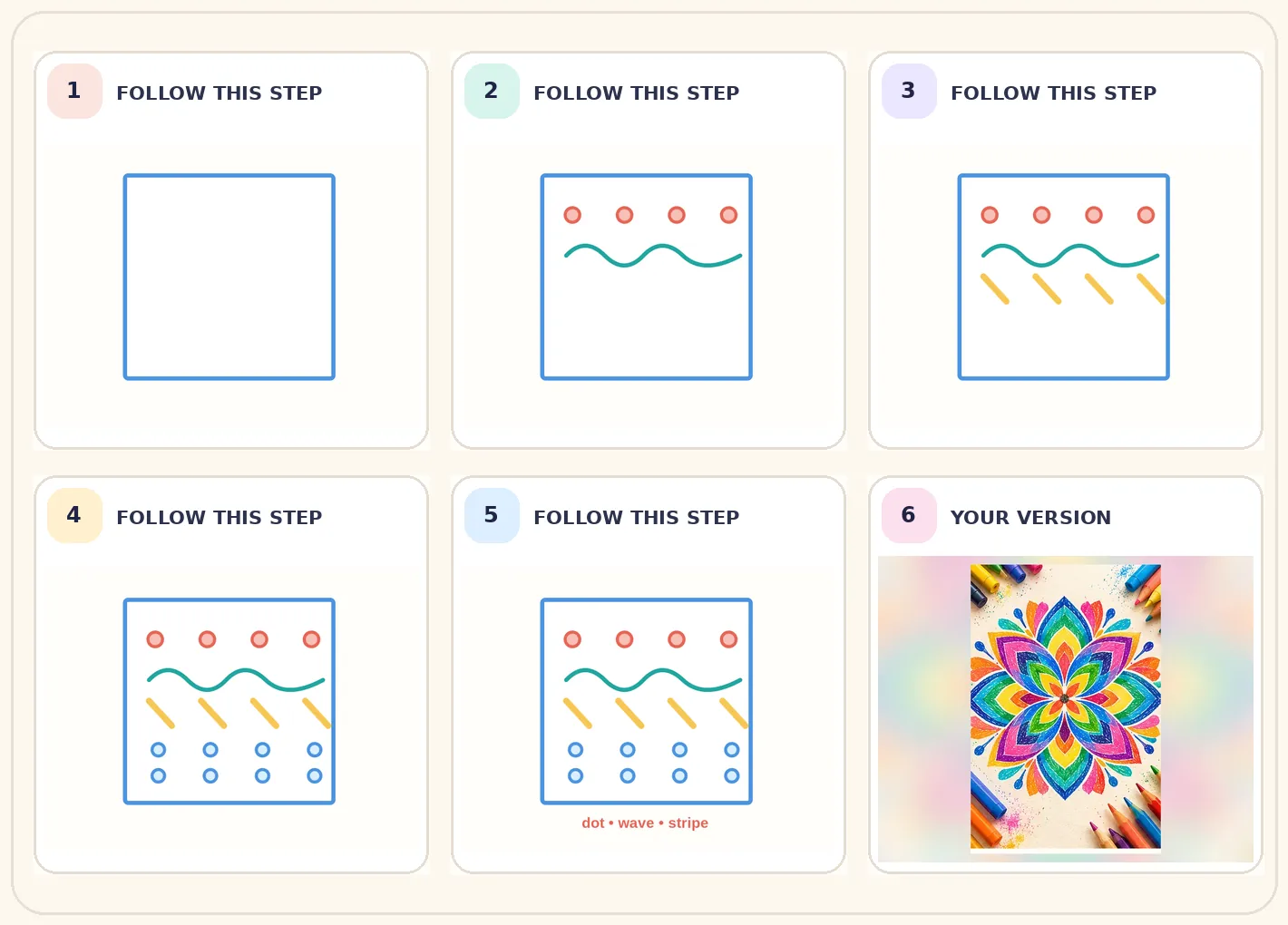
Make it, one picture at a time.
Look at the picture, try that step on your paper, then move to the next. Follow the numbered stages, then choose your own colours and details.
 STEP 01
Choose three colours and draw a big square on your paper.
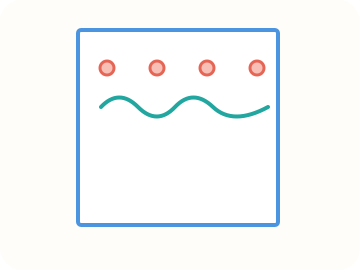 STEP 02
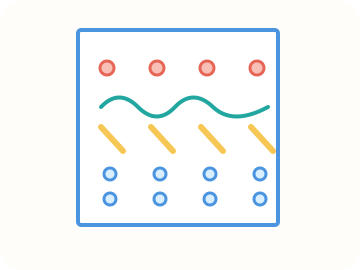
Fill the first row with simple shapes such as dots, waves and stripes.
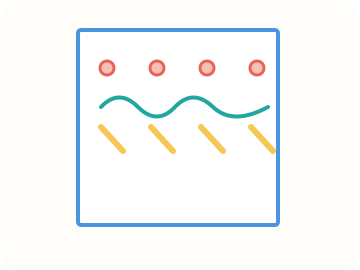 STEP 03
Repeat the same three shapes in the next row but change their order.
 STEP 04
Continue until the square is filled. Leave some white space so the pattern stays clear.
 STEP 05
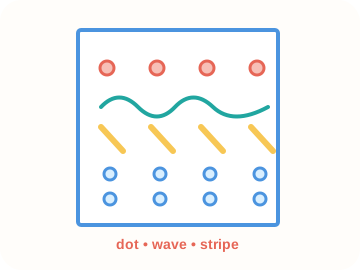
Point to the part of the pattern that repeats and invent a name for it.
Make it your own
For younger children, use only two shapes. For older learners, try a rule such as “every third shape is a star.”
Talk about it: Which marks repeat, and where does the rule change?
Help a young artist learn
These practical notes are for parents, carers and teachers. Children can follow the picture steps above.
For parents and carers — teach together
Start together
Pick three contrasting pencils and draw a spacious square.
During the activity
Ask the child to describe their repeat rule aloud.
Afterwards
Ask: Which marks repeat, and where does the rule change?
For teachers — classroom adaptation
Learning focus
Pattern recognition, repetition and prediction
Demonstrate and guide
Start a pattern together, then stop and have students predict the next mark.
Observe, do not grade the artwork
Ask learners to describe one choice they made and one thing they would try differently.
Make it easier or take it further
Make it easier
Alternate two shapes or colours.
Extra challenge
Create an A-B-B pattern and explain the rule.
Keep creating
Make animals using circles, triangles and squares
An easy drawing challenge that shows how complex pictures begin with simple shapes.
Build a colourful paper-collage city
Use cut-out shapes to invent a street full of imaginative buildings.
Activities are suggestions, not assessments. Adapt materials and supervise as needed.