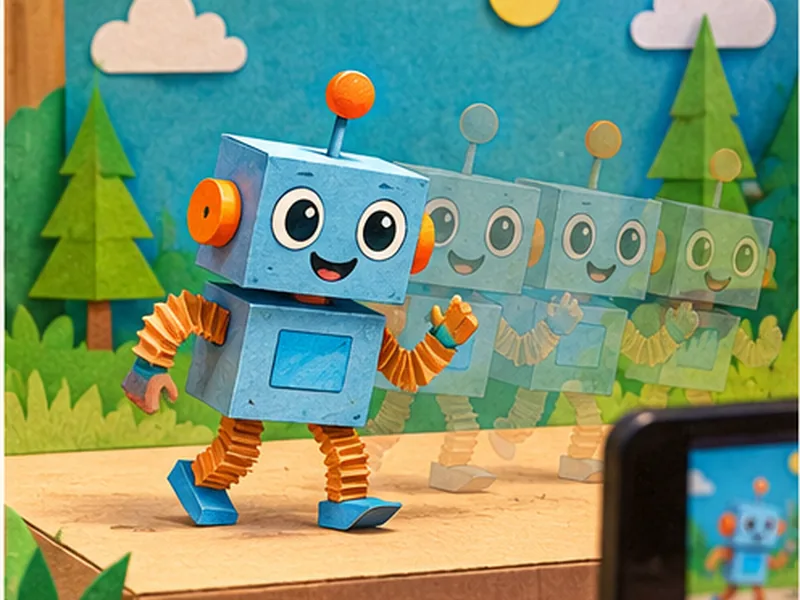
Stop motion works by photographing a character, moving it slightly, and photographing it again. Playing the photos in sequence makes the character seem alive.
What you will learn
Stop motion uses many slightly different photographs.
Skills: Sequencing, persistence and simple animation
Jump to picture steps ↓What you’ll need
- Coloured paper
- Scissors (adult supervision)
- Phone camera operated with an adult
- Clear tabletop
Get ready: Set up the camera in one position with a clear, non-reflective background.
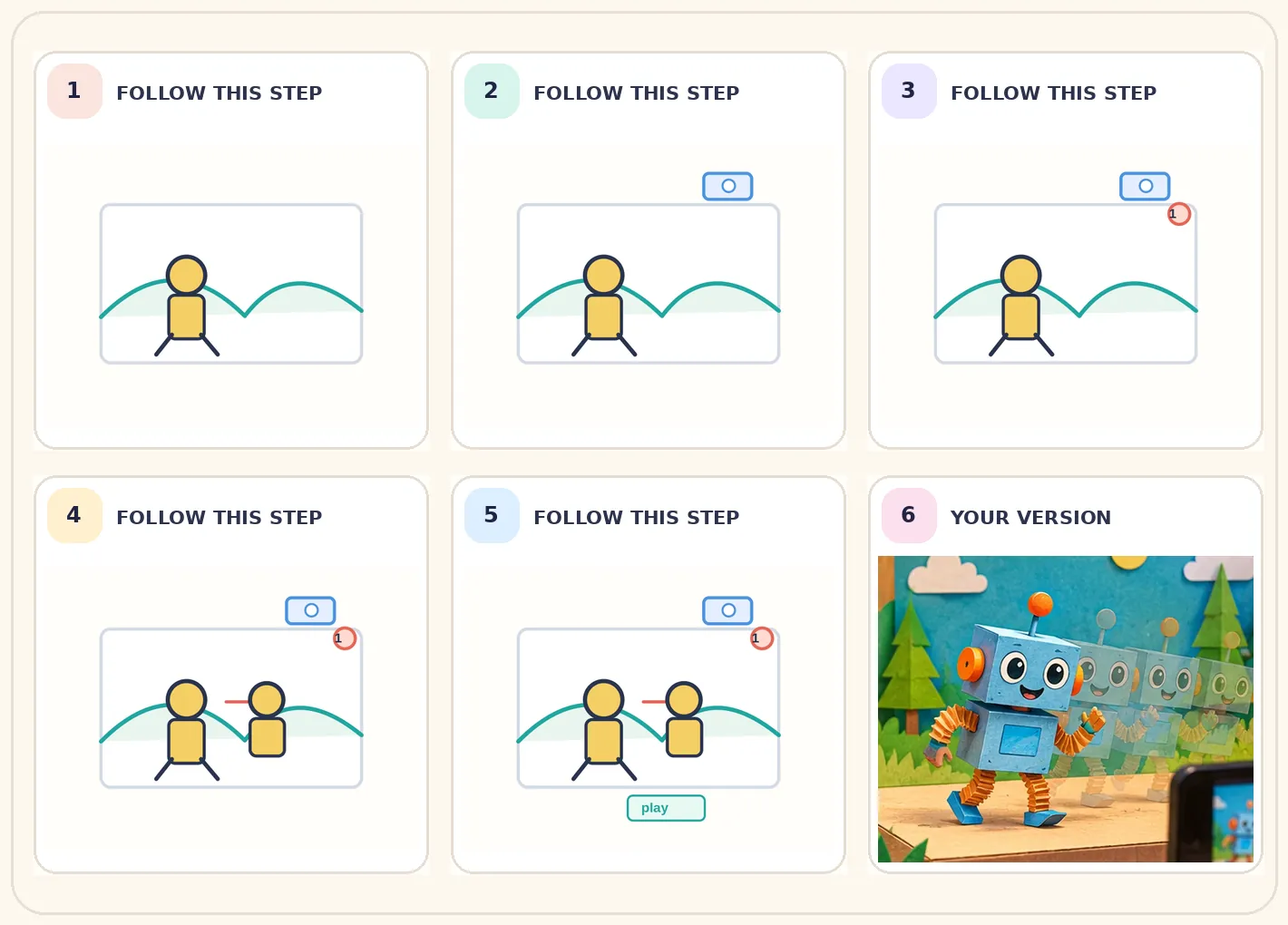
Make it, one picture at a time.
Look at the picture, try that step on your paper, then move to the next. Follow the numbered stages, then choose your own colours and details.
 STEP 01
Cut a simple paper character and one background shape, such as a hill or a house.
 STEP 02
Place both on a tabletop where the light stays steady. Keep the camera in one position.
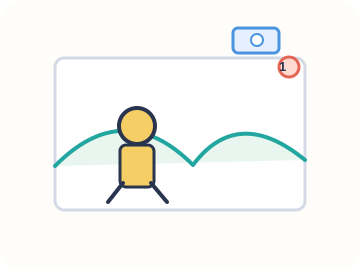 STEP 03
Ask an adult to take the first photograph.
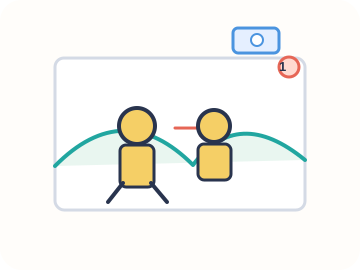 STEP 04
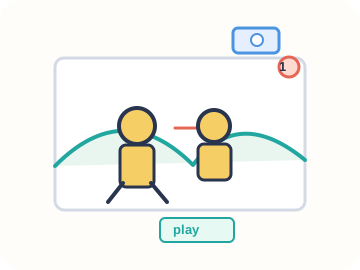
Move the character a very small distance and capture another photo. Repeat 10–20 times.
 STEP 05
View the pictures as a sequence using a suitable editing app with adult help. Notice how smaller movements change the action.
Make it your own
Avoid sharing children’s photos or personal details publicly. You can film only paper shapes and hands.
Talk about it: Why does the character seem to jump when the movement is large?
Help a young artist learn
These practical notes are for parents, carers and teachers. Children can follow the picture steps above.
For parents and carers — teach together
Start together
Set up the camera in one position with a clear, non-reflective background.
During the activity
Operate the camera yourself if the child is young.
Afterwards
Ask: Why does the character seem to jump when the movement is large?
For teachers — classroom adaptation
Learning focus
Sequencing, persistence and simple animation
Demonstrate and guide
Use pairs: one child moves the paper, the other checks the scene; an adult controls recording.
Observe, do not grade the artwork
Ask learners to describe one choice they made and one thing they would try differently.
Make it easier or take it further
Make it easier
Photograph a shape moving across four positions.
Extra challenge
Add a second character and a simple obstacle.
Keep creating
Make a bouncing-ball flipbook animation
Animate a bouncing ball on paper, one little drawing at a time.
Storyboard a tiny three-scene story
Plan a short animation before drawing lots of frames.
Activities are suggestions, not assessments. Adapt materials and supervise as needed.