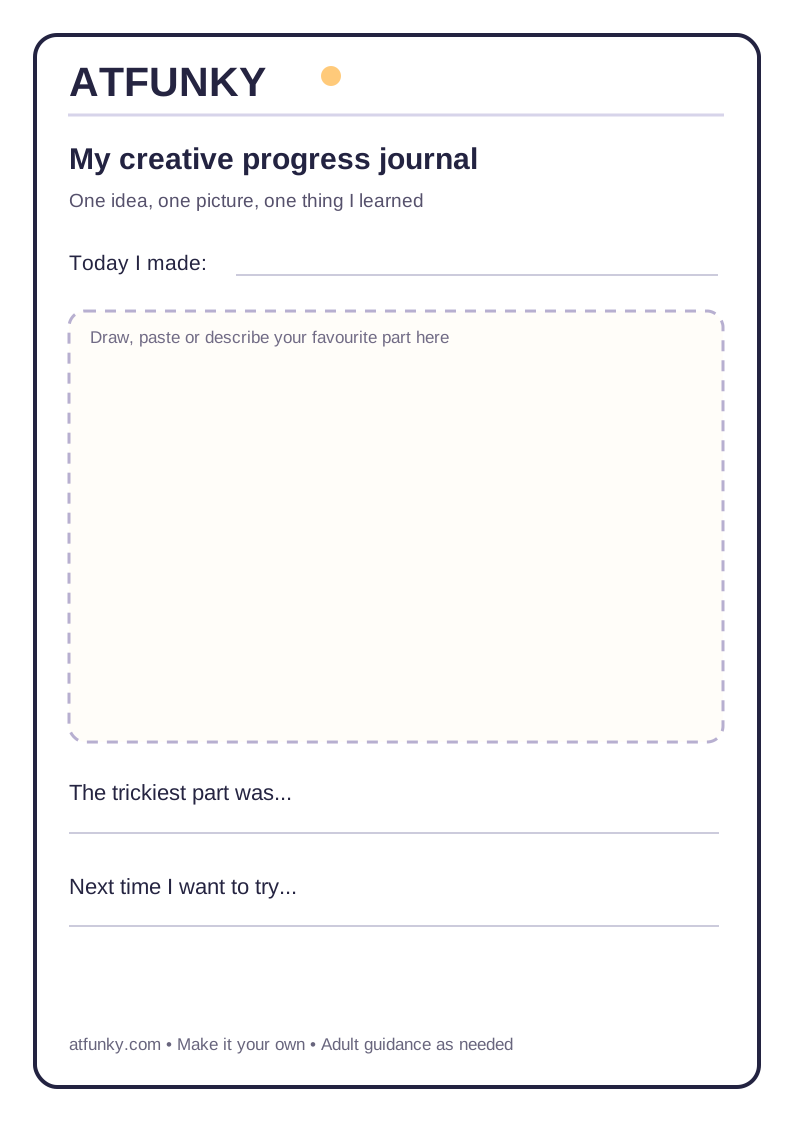
Learners practise visual communication, teamwork, sequencing and explaining their design choices without needing specialist software.
Prepare the materials
- Scrap paper and safe art materials
- Pencils, crayons and glue
- Large sheet for shared work
- Scissors used under appropriate adult supervision
There is no rush to finish in one week. Repeat an activity when a learner wants more practice. Adults handle tools and devices that need supervision.
Four guided sessions
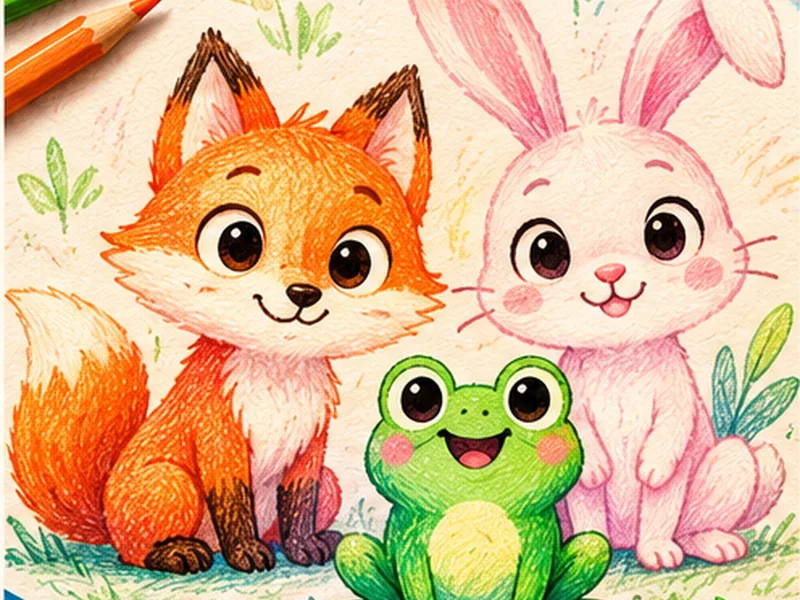
Draw a shared collection of animals
Learning goal: Use shapes to make individual pictures, then compare creative choices.
For parents: Ask open questions such as “What else could that shape become?”
For teachers: Pair learners briefly to share one idea, then invite independent drawings.
Ask afterwards: How were two drawings different even when they started from the same shape?
Open the illustrated lesson →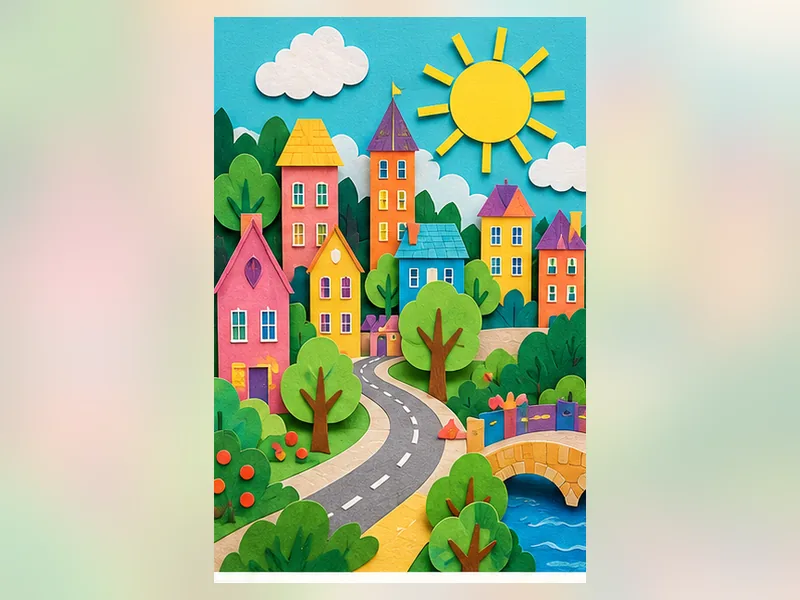
Build a paper neighbourhood
Learning goal: Make buildings, streets and a shared background from paper shapes.
For parents: Offer materials, then allow learners to choose the colour scheme.
For teachers: Divide pupils into small groups with roles: shapes, buildings, trees, assembly.
Ask afterwards: What would people do in the neighbourhood?
Open the illustrated lesson →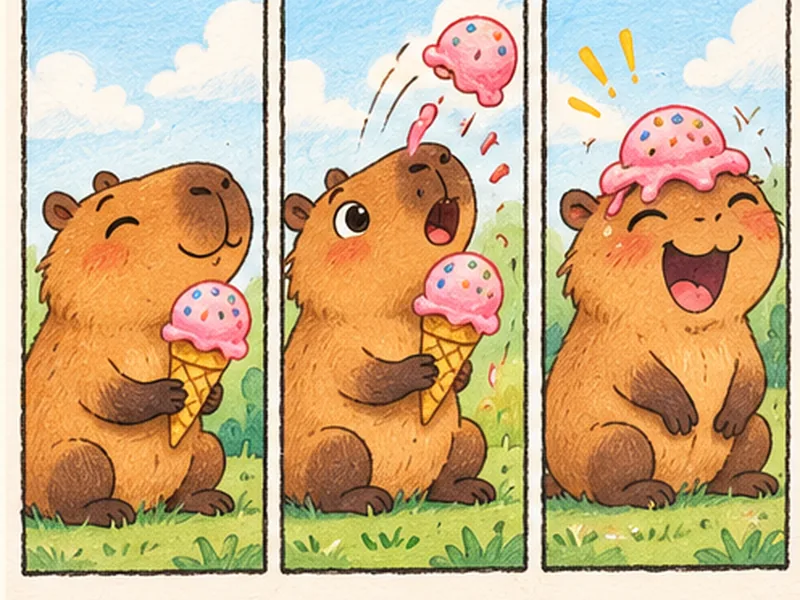
Turn pictures into stories
Learning goal: Organise three pictures into an understandable story.
For parents: Ask the child to describe what changes from frame to frame.
For teachers: Have groups explain their story orally; allow children to opt out of reading aloud.
Ask afterwards: What could make the ending surprising?
Open the illustrated lesson →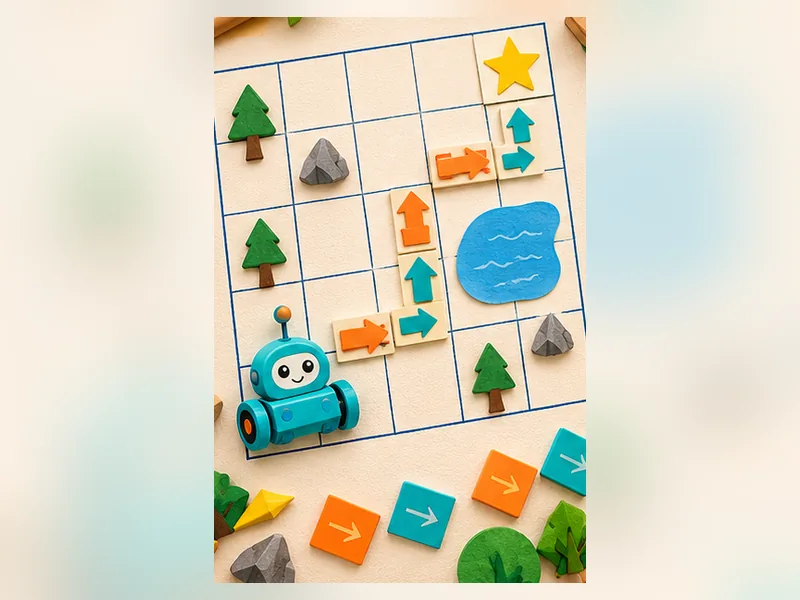
Solve a map challenge
Learning goal: Plan and test a route using an ordered sequence of steps.
For parents: Let the learner try again after a wrong turn.
For teachers: Use a floor grid or paper maze with “forward”, “left” and “right” commands.
Ask afterwards: What did you change after your first attempt?
Open the illustrated lesson →Reflect and keep creating
Save finished artwork in a folder, date each page if you wish, and ask what the learner enjoyed making. Avoid ranking one child’s results against another’s.